| FINE
TEQUILA (100% AGAVE)
There are basically two types of tequila, that bottled
in the U.S., and that bottled in Mexico. Generally,
tequila bottled in the U.S. is not of the highest quality.
It is shipped across the border in tanker trucks, contains
a mixture of cane, maguey, agave, and, or other alcohols,
and is sold for a cheaper price. Stated on the bottle
is, "A distillate from the Mezcal plant",
meaning that it is derived from a more crude process,
and is thus not fine tequila. This type is called "MIXTO"
tequila (MIXED), and is required by the Mexican Government
to have only a minimum of 51% agave sugar ingredients,
with the remainder 49% being these other, less expensive
sugars. There are many Mixto tequilas on the market
today(some are even bottled in Mexico); they are generally
the lower priced brands.
This
type is typically used for mixing in margaritas or other
mixed drinks. Those who drink it straight, may experience
a burning and harsh taste. Those who think it is tequila
as it should be, are missing out on the true flavor
of fine tequila. One can easily tell the difference
by smell, and certainly by taste between this and finer
tequila. However, this form of crude tequila is more
commercialized due to lower pricing, and a lack of knowledge
of what is good tequila.
What
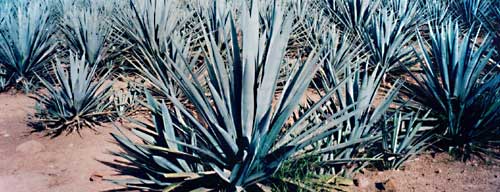
is fine tequila? Fine tequila is made from the Blue
Agave Plant (Agave Azul Tequilana Weber), found naturally
and cultivated in the plains of the state of Jalisco,
Mexico. Agave is not a cactus, rather a succulent in
the agaveracea (lilly) family. The name Weber is after
the botanist who first classified it. If it is to be
tequila, which enjoys owning the Certificate of Origin
from the International Congress of Industrial Property,
it must be made from this specific variety of the blue
agave plant. This Certificate of Origin is a legal aspect,
internationally known, designating certain products
exclusively from certain countries. Tequila is exclusively
a product of Mexico, and principally from its state
of Jalisco and a few small, designated regions of the
states of Guanajuato, Tamalpais, Michoacan, and Nayarit.
The
process of making fine tequila begins with the maturation
of the blue agave plant after about 8-12 years. The
Jimador cares for and harvests the plant. The plant
is then cooked using steam for up to 30 hours in ovens
to extract the sugary juices. It is then milled to remove
the juice, these juices are then fermented 3-4 days,
then double distilled to seperate and refine the alcohols.
The
only sugars used in the distillation process of fine
tequila are agave sugars, and thus the category is marked,
"100% Agave Tequila". This is how one
can visually tell the difference between bottles which
state on the label, "a distillate from the mezcal
plant", and the decidedly finer 100% Agave beverage.
People have begun to recognize the difference on a large
scale. More and more tequila consumers are willing to
pay a few dollars extra per bottle for the 100% agave
brands, and thus there is happening an exodus from drinking
what people thought was tequila to drinking the smoother,
100% Agave tequilas. Fine tequila can be sipped straight
or in a premium mixed drink.
There
are five types of 100% Agave tequilas...
1.)
Blanco-
not aged at all, bottled after distillation. Clear in
color, with strong tastes of agave and a crisp alcohol
tingle. A favorite for many.
2.)
Joven- blanco tequila,
unaged, with agave caramel or carmel coloring added
for a golden color.
3.)
Reposado- aged
2-11 months in white oak casks. Receives a yellowish
color , as well as flavors from the oak barrels (perhaps
the barrels were used for aging cognac, whisky, sherry,
or are new; therefore giving a slightly different characteristic
to the taste). Reposado tequilas receive their color
from the tannins in the oak, not from caramel coloring
as do Mixto tequilas.
4.) Añejo-
aged for 1 year or more in white
oak casks. Deeper in color, often extremely smooth and
reflect the perfect balance between agave, oak, and
alcohol flavors.
5.)
Extra-Añejo- a new
category (as of January 2007) for tequilas aged 3 years
or more.
Mezcal is another type of beverage
made from the Maguey variety of the agave plant, and
created by different processes. Often the agave is cooked
with flame or with hot smoke in under-ground pits creating
a beverage different than tequila. Mezcal is often bottled
with Worms (Tequila never has the worm).
Over
the centuries people have enjoyed the unique and smooth
beverage of tequila, from the Aztec and Mayan Indian
civilizations to today's connoisseur. Try for yourself
one of the brands imported directly from Mexico, by
Pale Horse Imports Company. |
